OpenAI stays a non-profit organisation: Sam Altman backtracks
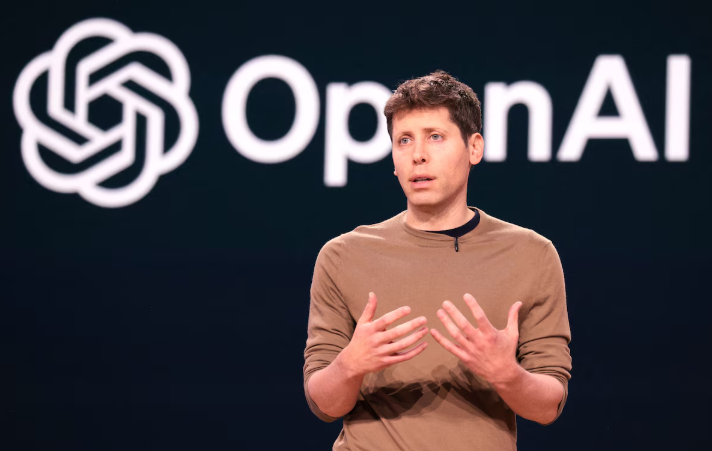
OpenAI is giving up on becoming a for-profit company. Its commercial arm can continue to generate profits, but will remain supervised by a non-profit board. Direct consequence: SoftBank’s contribution, conditional on that change of status, could fall from $30bn to $20bn.
OpenAI, the company behind the hugely popular ChatGPT, has just announced a major strategic reversal. Its chief executive, Sam Altman, stated on Monday 5 May that the company was abandoning its plan to convert into a for-profit business. The decision marks an important turning point for one of Silicon Valley’s most influential start-ups.
A decision following consultations
“OpenAI is not a normal company and never will be,” Sam Altman wrote in an email to staff published on the company’s website. The decision was taken after consulting civil society leaders and holding discussions with the offices of the attorneys general of California and Delaware, the states where OpenAI is respectively based and registered.
The transition to a for-profit model would have required approval from the authorities of both states — a step that will now no longer be necessary following this change of course.
Ambitions that require billions
Since its meteoric launch in 2022 with ChatGPT, OpenAI has become one of the most successful start-ups in Silicon Valley history. However, its ambitions in artificial intelligence require colossal investment — several tens of billions of dollars for designing, training and deploying its AI models.
That is partly why the company unveiled a plan last year to convert into a for-profit company within two years. The change of structure would have allowed its main investors to grow their holdings in a business geared towards profitability.
Widespread criticism of the change of structure
The plan had raised serious concerns, with many fearing it would place shareholder interests ahead of the ethical questions surrounding the development of artificial intelligence. The power of the technologies developed by OpenAI made that prospect particularly worrying in the eyes of many observers.
Among the notable critics, Elon Musk — one of OpenAI’s original founders in 2015, having contributed $45 million to the initial funding — even offered to buy the company. Sam Altman replied curtly that OpenAI was “not for sale”.
A new plan that preserves oversight
Under OpenAI’s new plan, the company’s commercial arm can continue to generate profits, but will remain under the supervision of a board operating as a non-profit organisation. According to Sam Altman, retaining this status “will allow us to continue making rapid and safe progress and to give everyone access to powerful AI”.
What about the investors?
The decision nevertheless raises questions about the recent massive investments in the company. Japanese investment firm SoftBank, which had announced a $30 billion contribution, had made the move to for-profit status a condition of its investment. According to certain official documents, that sum could now be reduced to $20 billion.
SoftBank’s stake is part of a record $40 billion funding round announced in late March 2025 — the largest ever raised by a private technology company. That round valued OpenAI at $300 billion.
A delicate balance between funding and ethics
OpenAI’s decision illustrates the constant challenge facing artificial intelligence companies: how do you fund the development of expensive technologies while preserving an ethical vision of technological progress?
By choosing to maintain its status as a non-profit organisation, OpenAI appears to be prioritising its original mission of developing artificial intelligence beneficial to humanity, rather than yielding to financial pressure. It remains to be seen how this strategy will square with its need for massive investment in the years ahead.
Key figures of the OpenAI story
| Item | Amount / date |
|---|---|
| Funding round announced in late March 2025 | $40 billion (a record for a private tech company) |
| OpenAI’s valuation in that round | $300 billion |
| Contribution announced by SoftBank | $30 billion |
| Possible contribution after the reversal | $20 billion |
| Elon Musk’s initial contribution in 2015 | $45 million |
| ChatGPT launch | 2022 |